Abstract
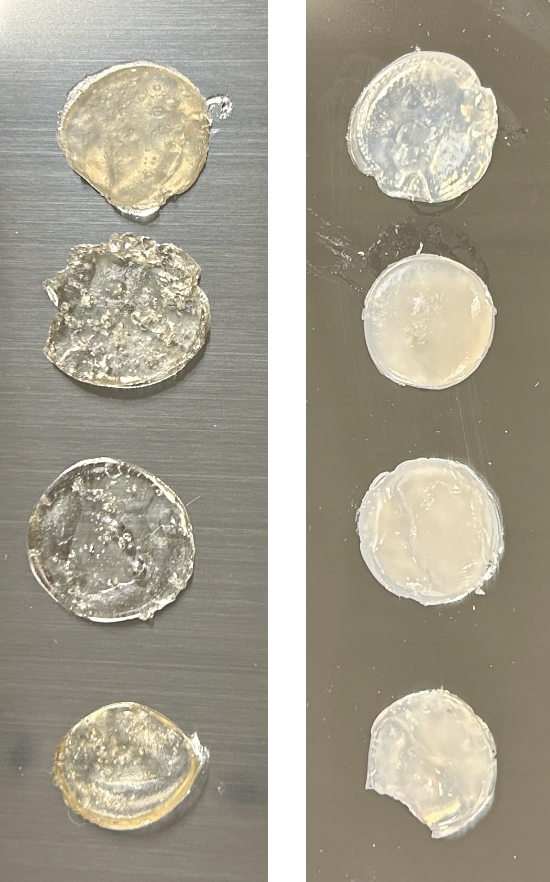
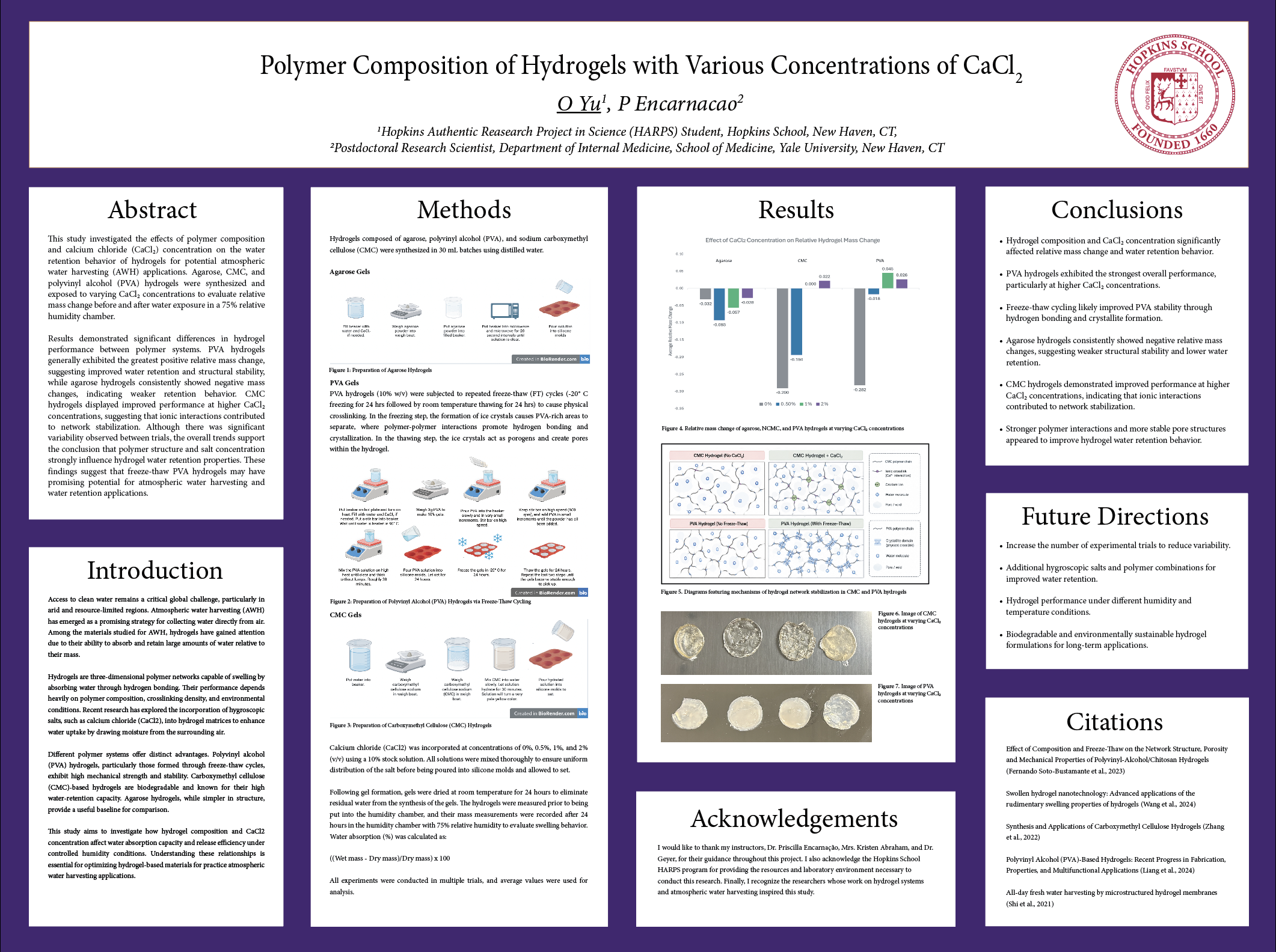
This study investigated the effects of polymer composition and calcium chloride (CaCl₂) concentration on the water retention behavior of hydrogels for potential atmospheric water harvesting (AWH) applications. Agarose, CMC, and polyvinyl alcohol (PVA) hydrogels were synthesized and exposed to varying CaCl₂ concentrations to evaluate relative mass change before and after water exposure in a 75% relative humidity chamber.
Results demonstrated significant differences in hydrogel performance between polymer systems. PVA hydrogels generally exhibited the greatest positive relative mass change, suggesting improved water retention and structural stability, while agarose hydrogels consistently showed negative mass changes, indicating weaker retention behavior. CMC hydrogels displayed improved performance at higher CaCl₂ concentrations, suggesting that ionic interactions contributed to network stabilization. Although there was significant variability observed between trials, the overall trends support the conclusion that polymer structure and salt concentration strongly influence hydrogel water retention properties. These findings suggest that freeze-thaw PVA hydrogels may have promising potential for atmospheric water harvesting and water retention applications. This study investigated the effects of polymer composition and calcium chloride (CaCl₂) concentration on the water retention behavior of hydrogels for potential atmospheric water harvesting (AWH) applications. Agarose, CMC, and polyvinyl alcohol (PVA) hydrogels were synthesized and exposed to varying CaCl₂ concentrations to evaluate relative mass change before and after water exposure in a 75% relative humidity chamber.
Research Poster